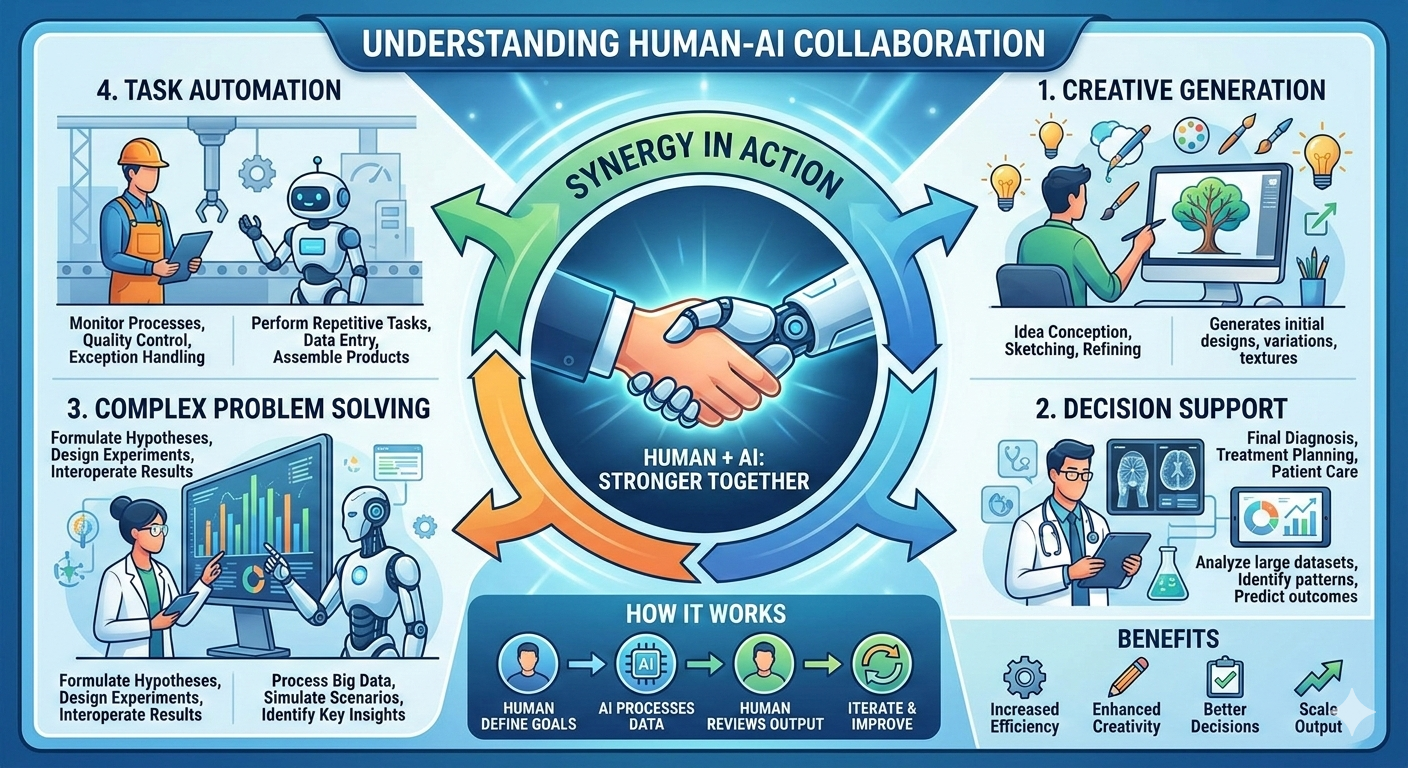
We are living through a profound structural shift in the world of work. For the first time, intelligent systems are automating not just physical labour, but cognitive execution. Tasks that once required teams of analysts, writers, and coordinators drafting reports, analysing data, generating content can now be performed, at least in part, by AI.
This transition is real, and its early signals are visible everywhere. In marketing and other white-collar fields, we see fewer jobs created, more applicants for each role, and companies achieving more with smaller teams. The hiring funnel, as we knew it, is breaking down. It’s easy to look at this landscape and see a narrative of pure disruption: humans being replaced by machines.
But that is only half the story. The other half is about reinvention and synergy. The market is indeed changing, but it is not eliminating the need for the human element. Instead, it is demanding a new kind of partnership one where AI handles the heavy lifting of information processing, and humans step in to provide what machines never can: authenticity, judgement, and genuine connection.
The Human Advantage in an AI-Driven World
The core of the transformation is the compression of the information-processing economy. AI is incredibly efficient at structuring data, drafting foundational content, and identifying patterns. This is where it excels. However, it is less adept at understanding the nuanced emotional landscape of a customer, building a relationship based on trust, or making a strategic judgement call based on incomplete information and human intuition.
This is where the modern marketing professional, and the modern worker in general, finds their new purpose. The most viable path forward isn’t to compete with AI on its own terms, but to collaborate with it. This partnership allows us to move beyond transactional tasks and focus on what creates authentic results:
- From Drafting to Storytelling: AI can generate a report or a draft of marketing copy. But a human is needed to infuse it with a brand’s unique voice, to craft a narrative that resonates on an emotional level, and to ensure it speaks truthfully to an audience’s needs and aspirations.
- From Data Analysis to Strategic Wisdom: AI can analyze massive datasets and spot trends. But a human is required to ask the right questions, to interpret those findings within a broader cultural context, and to make the final, value-driven decisions about which path to take.
- From Task Execution to Authentic Connection: AI can automate responses to customer requests. But when a customer is frustrated, confused, or seeking a personal touch, only a human can provide the empathy, active listening, and creative problem-solving that builds lasting loyalty.
Building a Future on Collaboration, Not Replacement
The challenge for many senior professionals today is that their roles, heavily focused on routine cognitive work and coordination, are being compressed. But this pressure is also a catalyst for reinvention. It forces us to ask a critical personal question: “What is the most realistic and probable path for me in this new economy?”
For many, the answer lies not in finding an identical job, but in redefining their value. It means leveraging AI as a powerful tool to amplify human capabilities. It means a marketing professional becoming the strategist who guides the AI, the storyteller who polishes its output, and the relationship-builder who takes its insights and turns them into genuine human engagement.
Ultimately, the future of work and particularly of marketing is not a choice between humans or AI. It is a partnership. The organisations and individuals who will thrive are those who understand that AI provides the efficiency and scale, but humans provide the soul, the ethics, and the authentic connection that turns a transaction into a relationship. The market is evolving, but its most valuable currency genuine human insight and connection remains irreplaceable.
